Tag: Report

  • The Sales of Avocado Up by 22,000 Times in Eight Years!

    The Sales of Avocado Up by 22,000 Times in Eight Years!

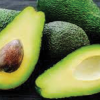
    The sales of avocado in China increased by 22,000 times in 8 years! If selecting the  marketing king in the fruit industry, the online popular fruit avocado is undoubtedly the winner.

    According to Customs data, China imported 43,900 tons of avocado in 2018, increasing about 22,000 times compared with two tons in 2010. According to the 2019 Online Avocado Products Consumption Insight Report released by CBN Data, avocado once again ranked among the top ten imported fruit in terms of sales volume. It is worth mentioning that although the so-call “quality” and “healthy” avocados are popular in first- and second-tier cities, however, in recent years, the sales share of third-tier cities and below has increased significantly, and the consumption growth rate has been much higher than that of the former.

    There is no doubt that these pricey things are upstarting, which indicates that the popularization of avocado has sunk to third- and fourth-tier cities successfully. The report also shows that no matter where in the country, females are the main consumers of imported avocados. Not only the proportion of female consumer far exceeds that of men, but also its growth rate is far ahead.

    In terms of age distribution, middle-aged and young consumers under the age of 45 accounted for 90% of the total consumer population, contributing nearly 90% of the sales share; the consumption frequency of 26 to 45 years old consumers showed an upward trend with age. In contrast, the growth rate of consumers in all ages in the third-tier cities and below are generally faster than that of first- and second-tier cities.

    It is understood that in recent years, the active expand of China’s logistics industry and fresh food e-commerce has facilitated the penetration of imported avocado into third- and fourth-tier cities. Many major avocado enterprises have seized the opportunity. In 2016, the global avocado giant Mission Produce announced a partnership with Lantao and PAGODA to establish an avocado ripening center to carry out the distribution business of ripe avocados under the brand Mr. Avocado.

    In June 2018, the company opened a second ripening center in Huizhou, Guangdong, to cover the supply in South China, Southwest and Central China. Public reports show that Mr. Avocado owns an average daily sales volume of 70,000.

    South American fruit and vegetable giant Camposol, in conjunction with Dole China, has rolled out the marketing of Haas Avocado since last year. Settled in more than 80 stores of Sam’s Club, Ole’ Supermarket, and Carrefour, the company claims that it has covered 26 cities in China, many of which are second- and third-tier cities.

    Apparently, the rapid popularization of avocado in the third- and fourth-tier cities is related to its decreasing price. According to the relative data, the price was up to 80 yuan/piece when the goods just entered China. Each bite on it cost an arm and leg. But now, the situation changed. The pricey fruit has gradually stepped down to enter the home of average consumers, especially winning the hearts of youth who pursue health and quality of life.

    To explore the tremendous fruit market in China, the 2020 Guangzhou International Fruit Expo (Fruit Expo) will be held on July 16-18. If you are interested in the Chinese market, please sign up to grasp the business opportunity now.


    Source: China Fruit Portal
     

  • Imported Fruit is Getting Favored

    Imported Fruit is Getting Favored

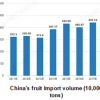
    While the domestic fruit prices are rising, China’s import of fruit in recent years has been growing rapidly year by year. Customs statistics show that in 2018, the total quantity and amount of imported fruits in China maintained a massive growth, of which the total quantity reached 5.527 million tons, a year-on-year increase of 25%; the total amount reached US$7.62 billion, a year-on-year increase of 36%.


    Source: Fruit Expo  & WFIC


  • Fruit Expo 2020 to Be a Big Hit!

    Fruit Expo 2020 to Be a Big Hit!

    Firstly, Fruit Expo 2020 will take full advantage of its geographic location. Staged in Guangzhou, one of the biggest fruit trade hubs in Southeast Asia, Fruit Expo 2020 is in the vicinity of Guangzhou Jiangnan Fruit and Vegetable Wholesale Market, one of the largest fruit and vegetable wholesale markets in China and even in Southeast Asia.

    Secondly, Fruit Expo 2020 will be staged on a show floor of 30,000 sq.m, hosting 500+ exhibitors and 30,000 visitors, with supports from China Fruit Marketing Association (China’s biggest fruit association), Guangzhou-located consulates of Thailand, Chile, India, Indonesia, Malaysia, Ecuador, Mexico, Peru, Greece, and etc.

    Last but not least, Fruit Expo 2020 will be concurrently held with World Fruit Industry Conference 2020 where the latest technology and trends will be shared with its attendees!

    FRUIT EXPO is an unprecedented opportunity for you to expand your reach in China!


    Source: Fruit Expo  & WFIC


  • Analysis of China’s Fruit Industry in 2019

    Analysis of China’s Fruit Industry in 2019

    Report

    Since 2019, the price of fresh fruit has been rising. From May to June, the fruit prices in China peaked and some even renew the record of the past ten years.

    Fruit Prices Will Decline in the Second Half of 2019
    According to the National Bureau of Statistics (NBS), in July 2019, the price of fresh fruit rose by 39.1%, making CPI increase by about 0.63 percentage points.

    Mr. Lin Guofa, CRO of BRIC Agricultural Products Sales Website, told the reporter that the sharp increase of fruit prices this year was mainly due to the low stock of fruits. Meanwhile, the yield in southern this year decreased and the on-season time of most fruits delayed, resulting in the tight supply and rapid rise of price in this period.

    However, following the emerge of some seasonal fruits in early June, prices also decreased. By mid-August, the price of various fruits had fallen back to normal levels.

    Imported Fruit is Getting Favored
    While the domestic fruit prices are rising, China’s import of fruit in recent years has been growing rapidly year by year. Customs statistics show that in 2018, the total quantity and amount of imported fruits in China maintained a massive growth, of which the total quantity reached 5.527 million tons, a year-on-year increase of 25%; the total amount reached US$7.62 billion, a year-on-year increase of 36%.

    In terms of imports, Vietnam is China’s largest source of fruit imports. In 2018, its total import volume was 1.34 million tons, up by 15.5% year on year. After Vietnam, the following largest sources are the Philippines, Thailand and Chile, the import quantum is 1.17 million tons, 1.02 million tons and 400,000 tons respectively, up 34.5%, 56.9% and 53.8% in several. From the perspective of category, the top five imported fresh fruits in China in 2018 are cherry, durian, banana, table grape and orange.

    Guangxi Pingxiang Port is the largest import and export port for land transported fruit in China. In the first half of 2018, the import and export of fruit at the Port was 659,000 tons, of which 555,000 tons were imported, with a year-on-year increase of 21.4% and the value of 4 billion yuan,.

    With the popularization of network e-commerce and the improvement of the logistics chain, durian, mangosteen and other once expensive fruits have become popular and got more acceptance in the country. This year, the value of imports up by 30% year on year. The imported fruit focused on the high-end market before, and now it is beginning to cover the both high-end and mid-market.

    The Characteristics of China’s Imported Fruit
    There are several major characteristics of China’s imported fruits:
    First, the import volume of tropical fruits is soaring, mainly including banana, durian, rambutan, coconut, pineapple, lychee and longan. The major reason is that the tropical area of China is relatively small. There is not winter in southern Hainan while the lowest temperature of winter in the tropical regions such as Guangdong, Guangxi and southern Yunnan is close to 0 degrees Celsius, which affects the yield of some tropical fruits in winter and reduces the production. However, tropical fruit has a huge variety, great taste and being sought after by consumers. Since domestic production is not enough, imports are requisite.

    Second, the types of imported high-end fruit increased. In addition to the main products such as cherry and avocado, the imports of high-end apple and kiwi also increased steadily, mainly because of the rapid increase in consumers’ demand for high-quality fruits.

    Third, the differences in seasonal fruit in north and south hemisphere lead to the increase in imports, the main of which include kiwi, cherry, grape, apple, orange, citrus and so on. When China is in winter and spring, the southern hemisphere is in summer and autumn. Whenever at this time, the corresponding fruit supply is tight in the country so that import is needed for meeting the demand.

    Another reason for the import growth is the escalation of consumption as well as the more stable quality of imported fruit. Most of the local fruits are grown by private investors with a low degree of standardization. In addition, as the import volume keeps increasing and the tax revenue decreases, the price of imported fruits is becoming more and more acceptable.

    Also, the emergence of high-quality fresh produce e-commerce promoted the increase in fruit imports. According to statistics from FORWARD, the market transaction volume of China’s fresh produce e-commerce industry reached 210.32 billion yuan in 2018, an increase of 49.9% from 2017 (140.28 billion yuan).


    Source: FORWARD